
Drywall repair in Silver Spring starts with one visit
Drywall repair in Silver Spring, MD is what we do every day. The hole the doorknob made. The crack along the ceiling seam. The brown ring from an old leak. The tape seam showing through the paint.
These are small problems. But they stare at you every day. And they get worse when you wait. Cracks spread. Stains bleed through new paint. Loose tape pulls more tape with it.
We are a Silver Spring drywall crew. Walls are our whole trade. Call (301) 679-9193. We come look at your walls free. You get a written price. No pressure.
What we fix every week
- Holes. Doorknob punches and dents. We cut a clean patch. We tape it. We match the texture. Gone.
- Cracks. Hairlines along seams from settling. We re-tape them right. They stay shut.
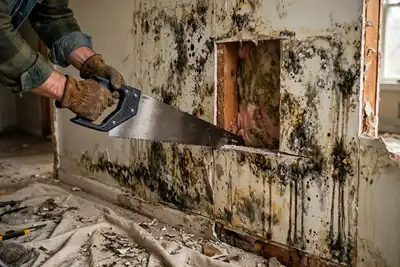
- Water stains. Brown rings on ceilings. Dry and solid means we seal and refinish. Wet means the board comes out.
- Nail pops. Little bumps where fasteners push through. We re-fasten with screws. We refinish the spots.
- Bad old work. Visible seams and crooked corners. We skim and refinish over it.
Not sure what you are looking at? See signs you need drywall repair.
New drywall: hang, tape, finish
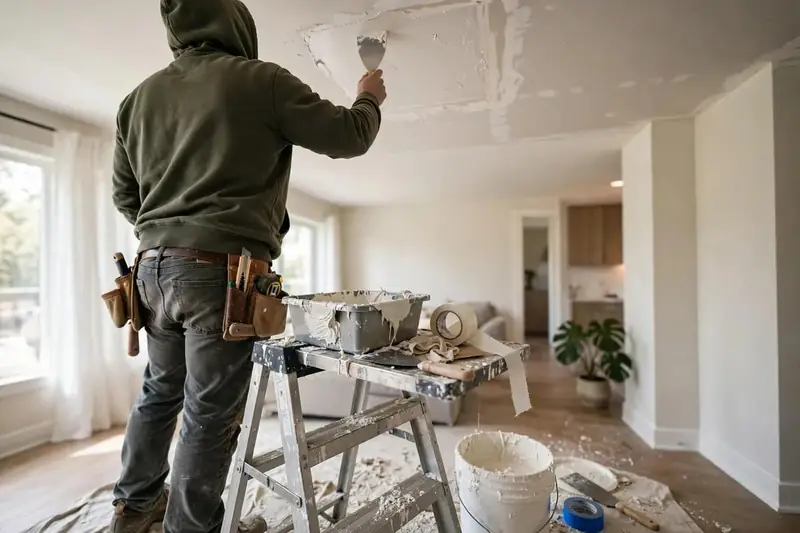
A real install runs in order. We hang the boards tight. We bed tape in the seams. We build three coats of mud. Each coat goes on wider than the last. We sand between coats. We check with angled light.
Rushing the drying causes cracks later. Mud shrinks as it dries. Each coat needs its turn. A full room takes three to five work days. See how long drywall takes.
Basements and baths get different board. We use board made for damp air. We leave the right gap at the floor. Regular board in a damp basement grows mold. See basement drywall.
Silver Spring homes, and what their walls need
Most of Silver Spring was built from the 1940s to the 1970s. Cape Cods. Ramblers. Brick colonials. That shapes our work.
Plaster shows up in the oldest homes. Sound plaster gets skim-coated smooth. Crumbling plaster gets replaced with drywall. See drywall vs plaster.
Finished basements are everywhere here. They are our most common full-room job. We use damp-smart board as standard practice.
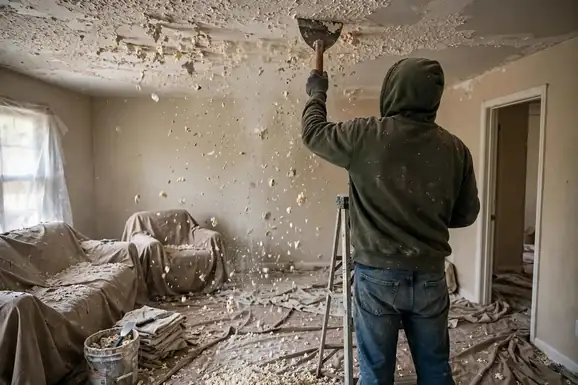
Popcorn ceilings are common in 1960s and 70s builds. We scrape them flat. Texture from before the mid-1980s gets tested for asbestos first. See asbestos safety.
Texture matching is the whole game
Smooth, orange peel, knockdown — the repair must match. Or it will show forever. We match texture as standard practice. See drywall texturing.
The trade grades finishes Level 0 to Level 5. Most homes want Level 4. That means smooth enough for paint to look even. See finishing levels.
The work, up close
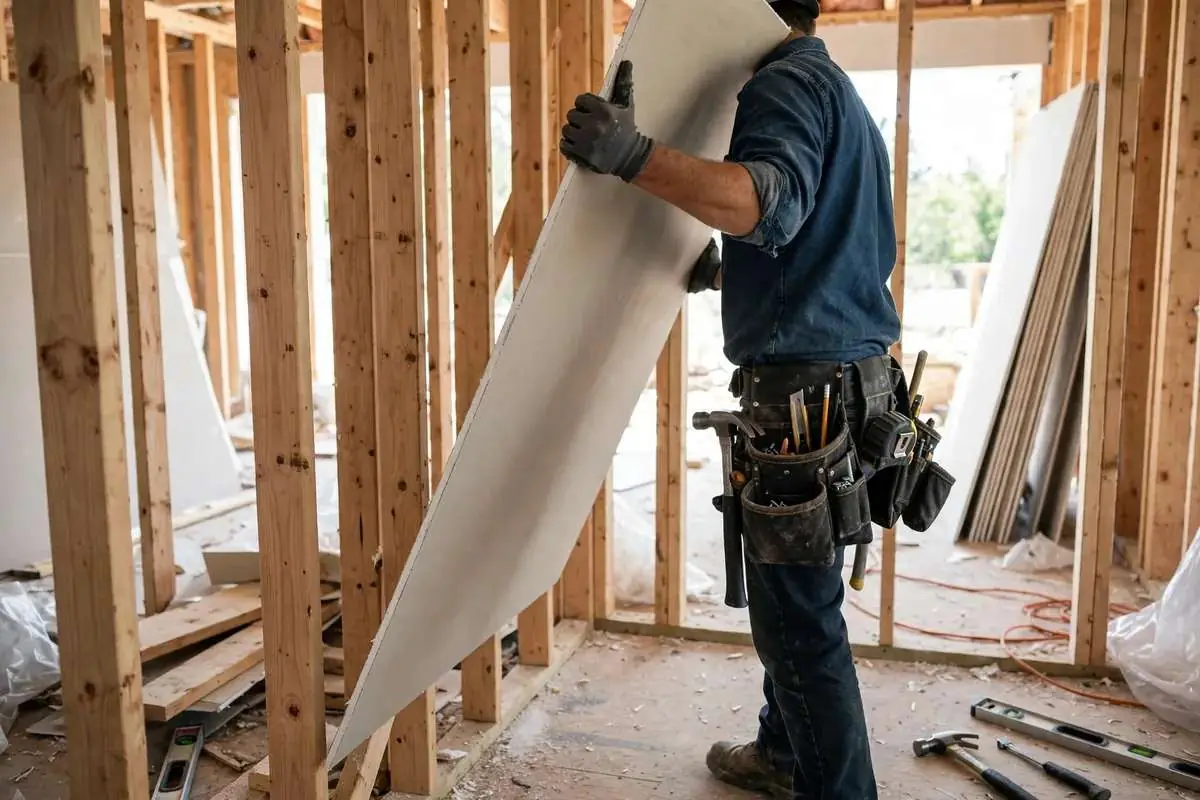
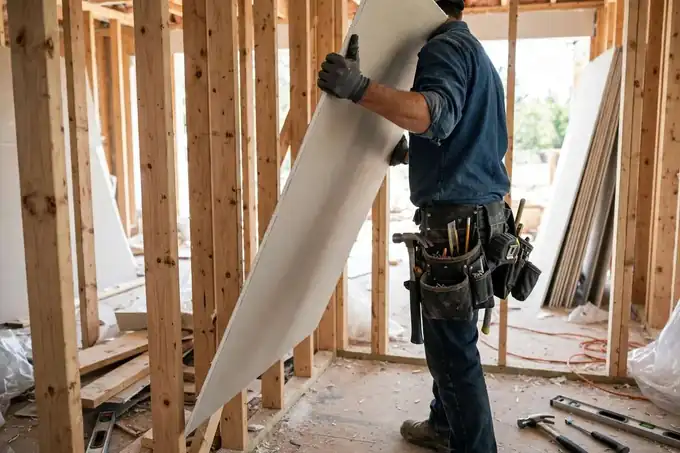
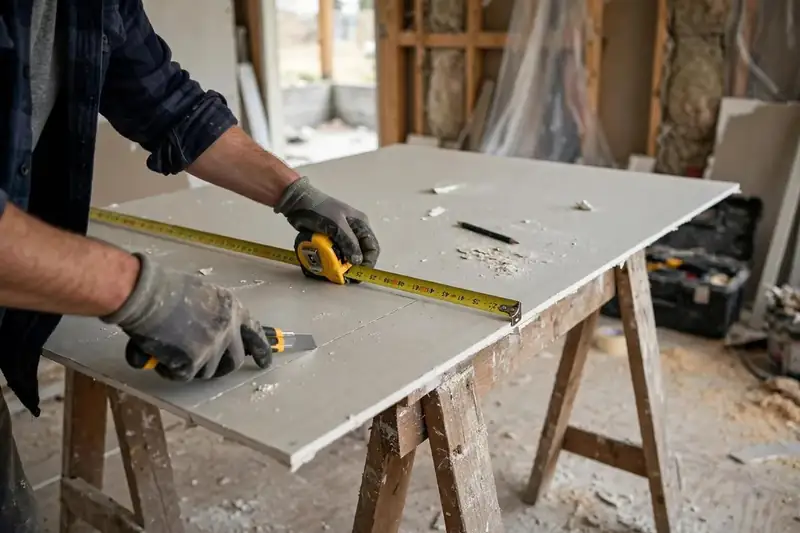
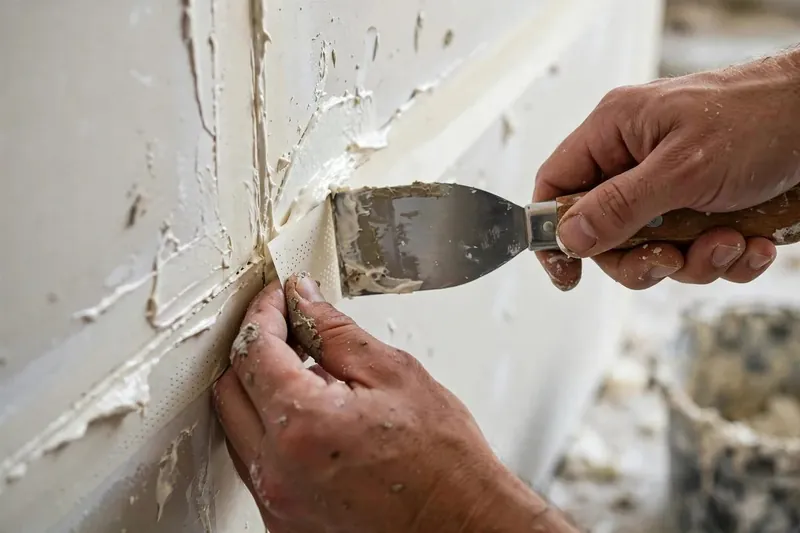
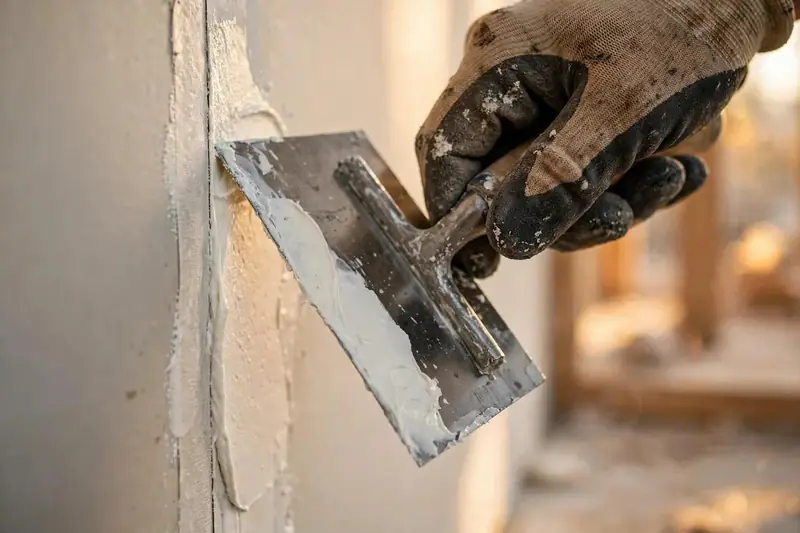
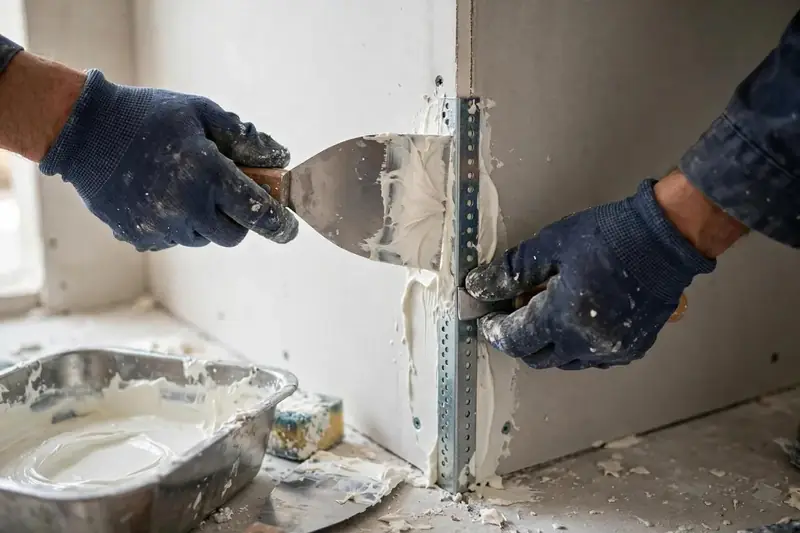
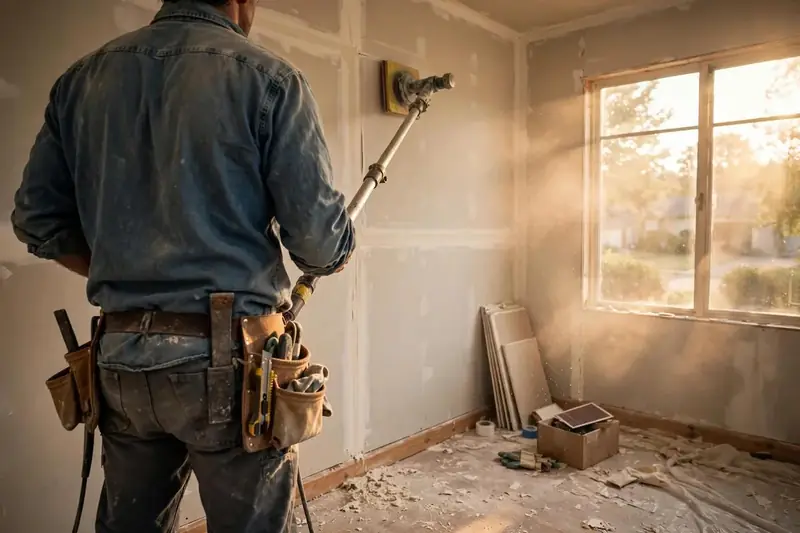
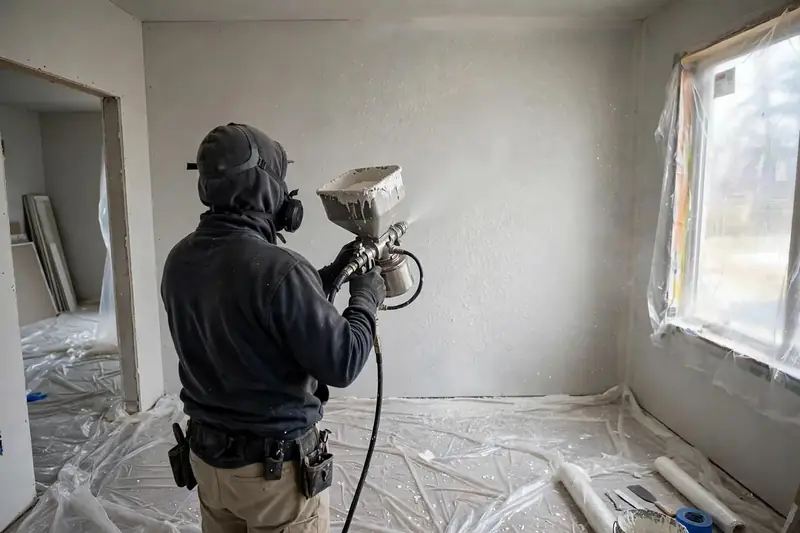
Drywall is a process: hang it straight, tape it tight, mud it wide, sand it smooth.
Here is what each step looks like. Photos show typical drywall work, not specific job sites.

What it costs
Four things move the number. How much wall is involved. What shape it is in. What finish level you want. How much is repair versus new work.
Small repairs often land in the low hundreds. Full-room work often lands in the low thousands.
A note on prices: costs go up and down. No two jobs are the same. Treat numbers here as starting points, not quotes. Your written estimate is the real number for your project.
See our drywall cost guide.
Done with drywall? The paint comes next
About half our customers ask about paint. We do drywall and only drywall. We leave the walls paint-ready, and your painter takes it from there. Ask us on the estimate visit and we will time our work to your painter's schedule.